Clary Sage vs Sage Essential Oil: Same Family, Different Character
They share a genus, a Mediterranean heritage, and a place in countless fragrance blends. But clary sage and sage essential oil are not interchangeable. Pick up a bottle of each, close your eyes, and inhale: the difference is immediate and unmistakable. One is soft and almost wine-like; the other is sharp, herbal, and assertive. Understanding what separates Salvia sclarea from Salvia officinalis makes you a more informed buyer, a more confident blender, and a safer user.
This guide walks through both oils side by side: their origins, their chemistry, their scent profiles, their practical applications, and the situations where one is a clearly better choice than the other.
Two Plants, One Genus
Taxonomy is a useful starting point here. Both oils come from the Salvia genus within the Lamiaceae (mint) family, but they are distinct species with genuinely different characters in the field and in the bottle.
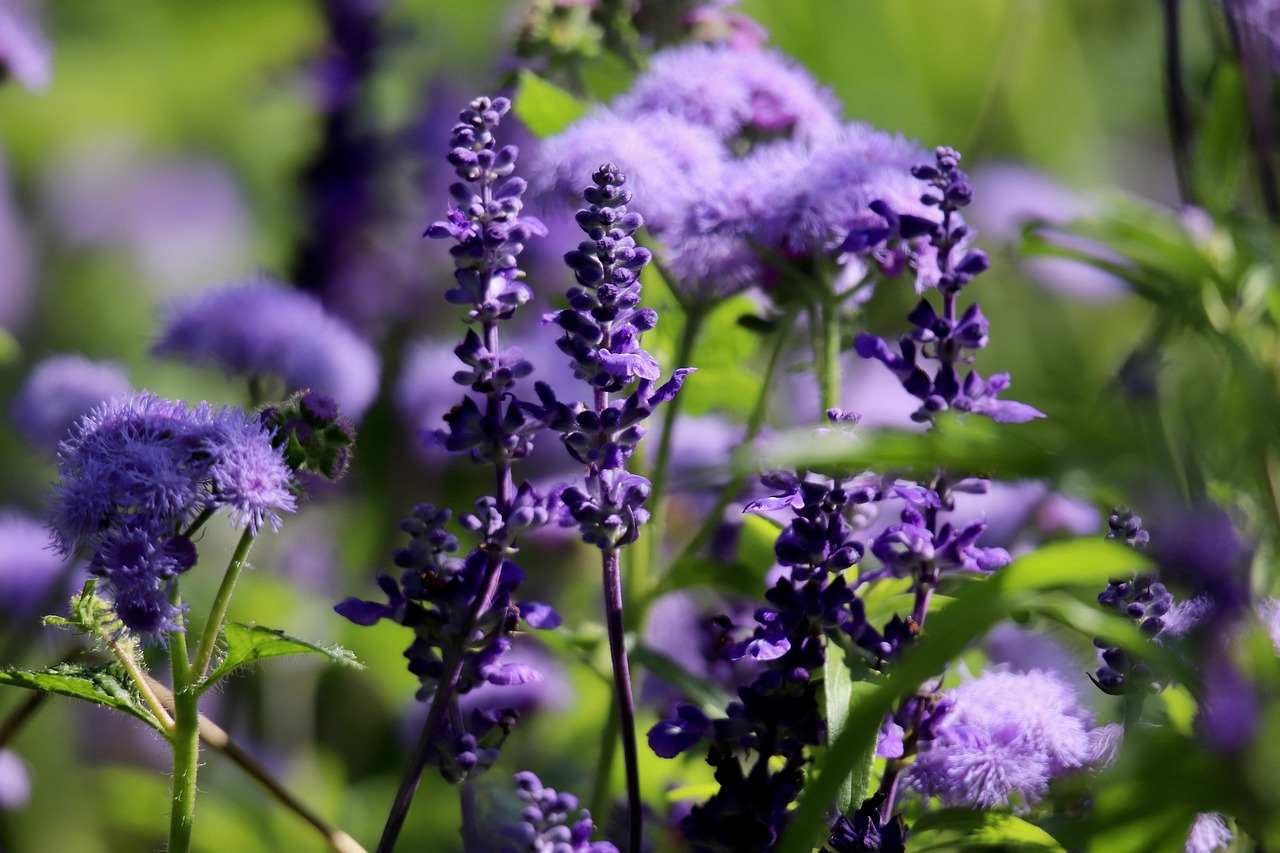
Clary sage (Salvia sclarea) is a biennial or short-lived perennial that grows tall and dramatic, with broad, textured leaves and showy flower bracts in pale lilac and pink. The oil is steam-distilled primarily from the flowering tops and leaves. Its aroma is famously sweet, slightly musky, and nutty, with that distinctive muscatel quality that makes it a prized ingredient in fine fragrance. If you want to go deeper on the plant's character, the complete guide to the muscatel herb covers its cultivation, chemistry, and history in full.
Sage (Salvia officinalis), sometimes called common sage or Dalmatian sage, is the familiar culinary herb. Compact and silver-green, it has been a kitchen and garden staple for centuries. Its essential oil is steam-distilled from the leaves and has a bold, camphorous, strongly herbal scent that commands attention in any blend.
Both are grown widely across southern Europe, with notable production regions in France, Bulgaria, and the former Yugoslav states. Sourcing quality matters for either oil, so always look for suppliers who share GC/MS testing data and disclose their distillation region.
Scent Profile Comparison
Scent is often the deciding factor in a purchase, so it deserves careful attention.
Clary sage sits in a nuanced aromatic space that is hard to place at first. It reads as earthy and floral at once, with a soft, almost sweet herbaceous body and that characteristic wine-adjacent note that perfumers call muscatel. There is nothing sharp about it. It rounds out blends and adds depth without dominating. For a detailed breakdown of every facet of that scent, this full scent profile is worth reading before you buy.
Sage oil is far more assertive. The camphor note hits immediately, followed by a dry, herbal sharpness and a slightly medicinal edge. It can overpower a blend quickly. Used with a light hand, it adds backbone and an aromatic clarity that blenders sometimes describe as green and clean. Used too liberally, it becomes the only thing you smell.
A useful mental shortcut: clary sage whispers; sage announces itself.
Key Chemical Differences
The aroma difference comes down to chemistry. Clary sage oil is rich in linalyl acetate (often 60-75% in high-quality distillates) and linalool, which give it that smooth, floral-sweet quality. It also contains sclareol, a diterpene that contributes the earthy, beeswax-like undertone unique to this species.
Sage oil has a very different composition. It contains significant amounts of thujone (alpha and beta), camphor, and 1,8-cineole. Thujone is where the important safety conversation begins.
Safety Profiles: A Real Difference
This is the section that matters most for anyone new to working with these oils.
Clary sage is widely regarded as one of the gentler oils in everyday aromatic and cosmetic use. At standard dilutions, it is well-tolerated by most people. The usual precautions apply: patch test before applying to skin, keep dilutions appropriate for the application (typically 1-3% for body products), and keep all essential oils away from children and pets.
Sage oil carries more significant cautions. Its thujone content is the primary concern. Thujone is a ketone that can be problematic at high doses or with prolonged exposure. Because of this, sage oil is generally considered unsuitable for use during pregnancy and is not recommended for those with a history of certain neurological sensitivities. It should be used at low dilutions and avoided in leave-on products applied to large body surface areas.
Neither oil should replace guidance from a qualified healthcare provider. If you have any questions about how either oil interacts with your specific situation, speak to a professional before use.
Side-by-Side Comparison Table

| Attribute | Clary Sage (Salvia sclarea) | Sage (Salvia officinalis) |
|---|---|---|
| Botanical name | Salvia sclarea | Salvia officinalis |
| Plant part distilled | Flowering tops and leaves | Leaves |
| Primary aroma | Sweet, musky, herbal, wine-like | Sharp, camphorous, dry, herbal |
| Key chemical constituents | Linalyl acetate, linalool, sclareol | Thujone, camphor, 1,8-cineole |
| General safety profile | Gentle; suitable for most adults at standard dilution | Use with caution; thujone content requires careful dosing |
| Pregnancy caution | Yes; consult a healthcare provider | Yes; generally avoided |
| Fragrance longevity (in blends) | Medium to base note | Top to middle note |
| Common aromatic uses | Diffusion, perfumery, personal care | Diffusion, room sprays, beard and hair products |
| Skin-safe in leave-on products | Yes, at 1-3% | With caution; lower dilution recommended |
| Blends well with | Lavender, bergamot, sandalwood, frankincense, geranium | Rosemary, cedarwood, eucalyptus, lavender, lemon |
| Typical price point | Mid-range to premium | Mid-range |
Pros and Cons
Clary Sage: Pros and Cons
- Pro: Gentle enough for most adults in standard cosmetic dilutions.
- Pro: A complex, layered scent that adds depth to perfume and skincare blends without overwhelming them.
- Pro: Works beautifully in leave-on products such as serums, lotions, and hair oils.
- Pro: Pairs naturally with a wide range of floral, woody, and citrus notes.
- Con: The musky character is polarizing; some people find it too sweet or unusual at first.
- Con: Premium distillates from reputable French or Bulgarian sources can be more expensive than sage.
- Con: Adulteration is common in lower-cost products; synthetic linalyl acetate is sometimes used to pad cheaper oils, so GC/MS verification matters.
Sage: Pros and Cons
- Pro: A bold, immediately recognizable scent that performs well in diffusion and room-based aromatic use.
- Pro: Works well in rinse-off products like shampoos and shaving preparations where exposure time is limited.
- Pro: Generally more affordable and widely available.
- Pro: Adds a crisp, clean herbal quality to masculine fragrance blends and beard care products.
- Con: Thujone content requires careful handling and restricts its use in leave-on skin products.
- Con: Not suitable during pregnancy or for certain sensitive users.
- Con: Overpowers a blend easily; precise measurement is essential.
- Con: The sharp camphor note may be off-putting in calming or sleep-adjacent diffuser blends.
Best For: Use Case Recommendations
Diffuser Blends for Evening Wind-Down
Choose clary sage. Its soft, musky sweetness lends itself to the kind of quiet, unhurried atmosphere many people seek in a bedtime ritual. Paired with lavender and a touch of cedarwood, it creates a rounded, cocooning scent environment. Sage, with its camphor sharpness, tends to feel more invigorating in the diffuser than settling.
Morning or Daytime Diffusion
Sage has an edge here. Its clean, assertive aroma can feel refreshing in a workspace or bathroom diffuser during morning routines. A few drops with lemon and rosemary creates a crisp aromatic backdrop for focused activity.
Personal Fragrance and Perfumery
Clary sage is the clear choice. Its role in fine fragrance is well-established. The muscatel note bridges floral and woody accords beautifully and gives blends a distinctive, slightly androgynous character that is genuinely hard to replicate with any substitute.
Hair and Scalp Products
Both have a place, but in different formats. Clary sage works well in leave-on scalp serums and hair oils at appropriate dilutions. Sage is better suited to rinse-off shampoos and conditioners, where its sharper character reads as clean and its contact time is naturally limited.
Beard Care and Masculine Grooming
Sage often resonates more in this category for its dry, herbal sharpness, though clary sage adds a sophisticated musky note when used as a supporting ingredient. Combining both in a beard oil, with clary sage at roughly double the percentage of sage, produces a layered result that neither oil achieves alone.
Skincare (Body Lotions, Serums, Facial Products)
Clary sage, without hesitation. Its gentler safety profile and pleasing scent make it a practical fit for leave-on products. Sage is generally better avoided in facial formulations and high-coverage body products because of its thujone content and the added caution required around prolonged skin contact.
Candle and Soap Making
Either can work, with adjustments. Clary sage holds reasonably well in cold-process soap but may fade in high-heat applications. Sage is more tenacious aromatically. For candles, sage's bold profile carries through the wax more assertively, which can be a feature or a drawback depending on the intended result.
The Verdict
For the majority of everyday cosmetic and aromatic uses, clary sage is the more versatile and accessible choice. Its gentle safety profile, complex scent, and wide compatibility with other notes make it easier to work with for beginners and experienced formulators alike. If you are building a personal care routine or a home fragrance collection, clary sage offers more range with fewer constraints.
Sage essential oil has genuine merit, but it rewards careful, informed use. It belongs in the hands of blenders who understand its chemistry and respect its potency. In the right formula, at the right concentration, it adds something distinctive that no other oil quite replicates.
The most honest answer is that these two oils are not really competitors. They occupy different spaces in a well-stocked aromatic pantry, and understanding both makes you a better craftsperson with either. If you are just beginning to explore the clary sage side of this comparison, learning how clary sage moves from garden to distillery adds useful context to what ends up in the bottle.
Same family. Very different character. Both worth knowing.